How to Buy Cryptocurrency as a Beginner: A Simple Step-by-Step Guide 2026
Buying your first cryptocurrency sounds intimidating, but it really comes down to four steps: pick an exchange, verify your identity, fund your account, and place your first order. This guide walks you through each stage in plain English, so you can go from "I have no idea where to start" to owning your first Bitcoin or Ethereum in under an hour.
Exchange or Wallet: Where Do You Actually Start?
New buyers often get stuck on this question right away. The short answer: start with an exchange. A wallet is something you'll want later, once you actually own crypto and want to store it somewhere more secure.
A crypto exchange is a platform where you buy, sell, and trade cryptocurrency using regular money (dollars, euros, pounds, etc.). Think of it like a brokerage app, but for digital assets — you deposit funds, then use them to buy coins.
A crypto wallet is the next step. It lets you store your coins outside the exchange, which matters if you're holding a meaningful amount or want to use decentralized apps (DeFi).
The beginner path looks like this:
- Sign up on an exchange
- Verify your account
- Deposit money
- Buy crypto
- (Optional) Move it to a personal wallet
How to Choose a Crypto Exchange
Not every exchange is built for beginners. Before picking one, compare them on a few practical criteria:
- Ease of use – is the interface simple enough for a first-time buyer?
- Funding options – can you deposit with a bank transfer, debit/credit card, or a mobile wallet like Apple Pay or Google Pay?
- Fees – trading fees, deposit fees, and withdrawal fees all add up.
- Coin selection – do they list the assets you actually want (Bitcoin, Ethereum, or smaller altcoins)?
- Security track record – has the platform had past breaches, and how did it handle them?
- Regulation – is it licensed to operate in your country?
A rough comparison of the type of platforms you'll encounter:
| Type of exchange | Best for | Typical trade-off |
| Beginner-focused apps | First-time buyers, simple UI | Slightly higher fees |
| Large global exchanges | Wide coin selection, deep liquidity | Interface can feel cluttered |
| Advanced trading platforms | Active traders, lower fees at volume | Steeper learning curve |
There's no single "best" exchange for everyone — it depends on your country, the coins you want, and how comfortable you are with a more complex interface. If you're buying your first $50–$100 of crypto, prioritize simplicity and a solid reputation over the lowest possible fee.
Best Crypto Exchanges for Beginners in 2026
Here's an honest look at the platforms most beginners land on, and what each one is actually good for.
Binance
Website: https://binance.com
The largest exchange in the world by trading volume and coin selection. Great if you eventually want access to smaller altcoins, but the interface can feel overwhelming on day one.
✅ Huge liquidity, lowest fees at scale, biggest coin selection
❌ Steeper learning curve for a first-time user
Coinbase
Website: https://coinbase.com
Built specifically for beginners. The app is simple, the buying flow takes about two minutes, and it's one of the most trusted names in the industry.
✅ Extremely easy to use, strong reputation, fast verification
❌ Higher fees than most competitors
Kraken
Website: https://kraken.com
One of the oldest exchanges still operating, with a strong security track record and solid customer support.
✅ Long-standing reputation, good security history, transparent fees
❌ Interface feels a bit dated compared to newer apps
Bybit
Website: https://bybit.com
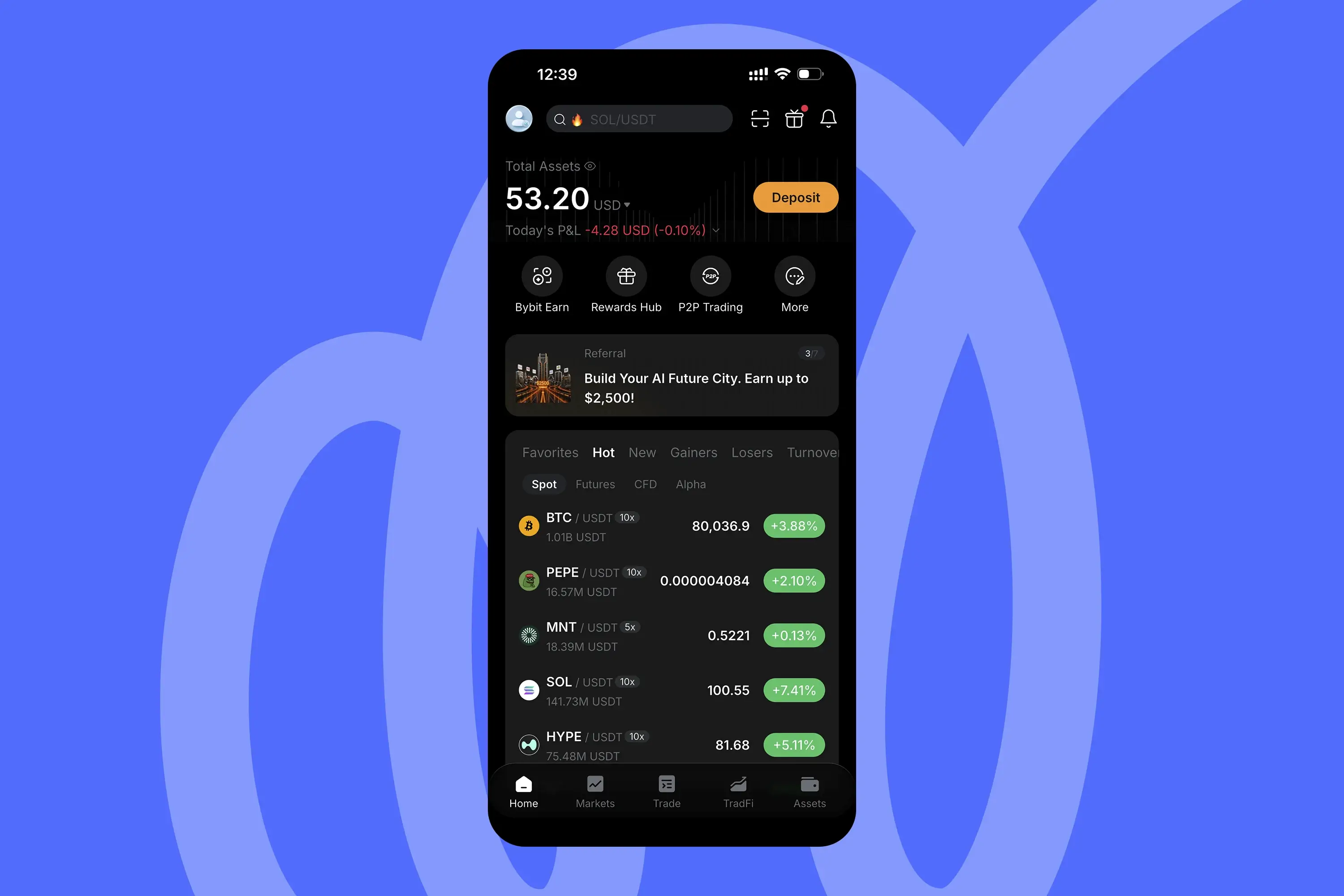
Started as a derivatives platform but now offers a clean, beginner-friendly spot trading experience with fast KYC.
✅ Simple interface, quick verification, competitive fees
❌ Slightly smaller coin selection than Binance
OKX
Website: https://okx.com
A major global exchange with a solid reputation, a built-in Web3 wallet, and a good range of supported coins.
✅ Reliable, built-in wallet integration, wide coin range
❌ Interface can feel busy for a first-time buyer
Crypto.com
Website: https://crypto.com
Known for its polished mobile app and crypto debit card, making it an easy entry point if you also want to spend crypto day to day.
✅ Clean app, crypto debit card, beginner-friendly onboarding
❌ Rewards/benefits often tied to staking their native token
How to Sign Up and Verify Your Account
The registration process is nearly identical across every major exchange.

Step 1 – Create an account. Go to the exchange's website or app, click "Sign Up," and enter your email address. Use a strong, unique password: ideally one you're not reusing anywhere else.
Step 2 – Confirm your email and turn on 2FA. You'll get a confirmation code by email. Right after that, enable two-factor authentication (2FA) using an app like Google Authenticator or Authy. This isn't optional, skipping it is one of the most common ways people lose access to their accounts or get hacked.
Step 3 – Complete identity verification (KYC). Regulated exchanges are required to verify who you are before you can deposit or trade. You'll typically need:
- A government-issued ID (passport or driver's license);
- A selfie, sometimes holding the ID;
- Occasionally, proof of address (a utility bill or bank statement).
Verification usually takes anywhere from a few minutes to a day. Always use your real information, accounts with mismatched or fake details tend to get frozen right when you need them most.
How to Fund Your Account
Once you're verified, you need to get money onto the platform. Common options include:
- Bank transfer – usually the cheapest option, though it can take one to a few business days to clear.
- Debit or credit card – instant, but exchanges typically charge a higher fee (often 1–4%) for card payments.
- Mobile wallets – Apple Pay, Google Pay, or similar options on exchanges that support them, offering a quick and familiar checkout experience.
- Peer-to-peer (P2P) trading – some exchanges let you buy directly from another user at an agreed price. It can sometimes be cheaper than a card, but only trade with sellers who have a strong rating and a long history of completed trades.
Whichever method you use, double-check the fee before confirming – a bank transfer instead of a card payment can save you a noticeable percentage on every deposit.
How to Buy Your First Cryptocurrency: Step by Step
Let's say your account is funded and you're ready to buy Bitcoin.
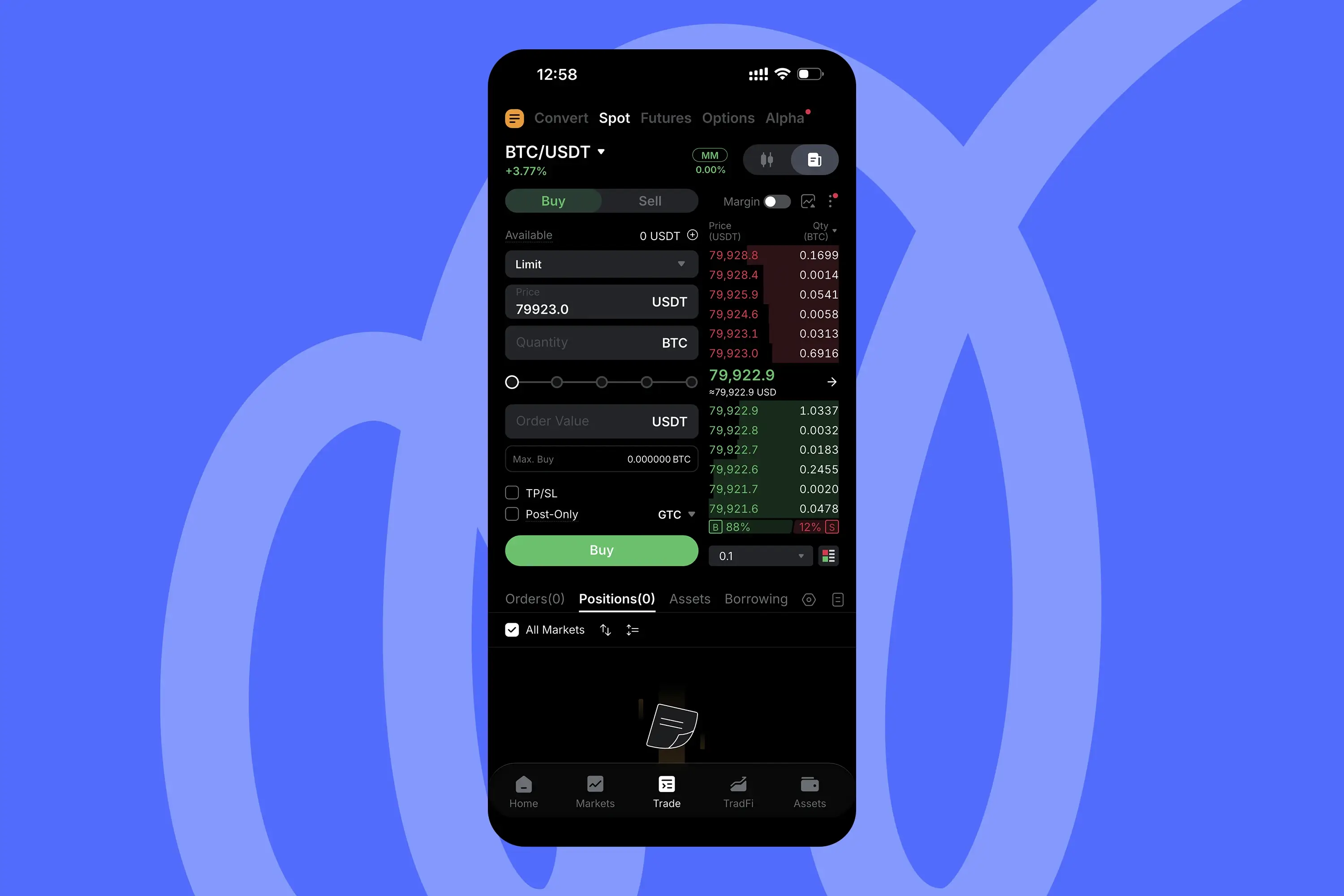
- Go to the "Trade" or "Spot" section of the exchange.
- Search for the trading pair you want – for example, BTC/USD or BTC/USDT.
- Choose your order type:
- Market order – buys immediately at the current price. Fast and simple, though the price can shift slightly by the time it executes.
- Limit order – you set the exact price you want, and the order only fills once the market reaches it. Better if you're not in a hurry and want more control.
- Enter the amount you want to spend, then confirm the purchase.
- That's it – the coin now shows up in your exchange balance.
Most exchanges charge a spot trading fee of roughly 0.1%–0.5% per trade, though this varies by platform and your trading volume. On a $1,000 purchase, that's typically somewhere between $1 and $5.
Common Mistakes Beginners Make
1. Leaving everything on the exchange. Exchanges do get hacked occasionally. If your balance grows past a few hundred dollars, consider moving it to a personal wallet – a software wallet like MetaMask for convenience, or a hardware wallet like Ledger or Trezor for larger amounts.
2. Losing the seed phrase. This 12–24 word phrase is the only way to recover a personal wallet. Write it on paper and store it somewhere safe. Don't screenshot it, and don't send it to yourself over messaging apps – both are easy targets for hackers.
3. Buying on hype. By the time a coin is trending everywhere, the easy gains are usually already gone. A common pattern: buy near the top, watch the price drop 50–70%, then either sell at a loss or hold for years waiting to break even.
4. Overpaying on withdrawal fees by picking the wrong network. When you withdraw crypto, you'll often have to choose a network. The same coin (like USDT) can move over several different networks, and the fees vary a lot:
| Network name | Description | Typical fee |
| TRC-20 (Tron) | One of the most widely used networks for transfers | ~$1–2 |
| ERC-20 (Ethereum) | Reliable but often the most expensive option | ~$10–20+ |
| TON | Usually one of the cheapest options | ~$0.10–1 |
| BEP-20 (BNB Smart Chain) | Low-cost, run on Binance's chain | ~$0.10–1 |
Fees fluctuate with network congestion, so treat these as rough guides, not fixed numbers. If you're unsure which network the recipient needs, always confirm before sending – sending to the wrong network can mean losing the funds permanently.
5. Believing in "guaranteed returns". Any offer promising a fixed daily or monthly return is a scam, no exceptions.
What to Do After Your First Purchase
Once you've made your first buy, don't rush into more trades. A few practical next steps:
- Store your login details and seed phrase securely – not in your phone's notes app.
- Double-check that 2FA is actually turned on.
- Only invest what you can afford to lose – this isn't a cliché, it's how the market actually behaves.
- Learn a few basic concepts: dollar-cost averaging (DCA), support and resistance levels, and market capitalization.
Frequently Asked Questions
Do I need a lot of money to start?
No. Most exchanges let you buy fractions of a coin, so you can start with as little as $10–$20.
Is it safer to keep crypto on the exchange or in my own wallet?
For small amounts, keeping it on a reputable exchange is fine. Once your balance grows, moving to a personal wallet reduces your exposure if the exchange is ever compromised.
What's the difference between a market order and a limit order?
A market order buys instantly at the current price. A limit order lets you set your own price and waits until the market reaches it.
Can I lose money just from fees?
Yes, if you're not paying attention. Card deposits, trading fees, and withdrawal network fees can add up – always check the fee before confirming a transaction.
Final Thoughts
Buying cryptocurrency for the first time is far simpler than most people expect. Pick an exchange that matches your comfort level, complete verification, fund your account through the cheapest method available to you, and start with a small amount. The first $50–$100 you invest will teach you more than weeks of reading articles ever could.
This guide is for educational purposes only and isn't financial advice. Cryptocurrency prices are volatile – always do your own research before investing.